As a result of my recent shakedown of my Burlingham ancestry and their service in the Great War, I received contact from a distant, previously unknown, cousin.
He was a descendant of Edith Burlingham, daughter of Robert and Elizabeth Burlingham, who are mentioned in my most recent blog. Edith was a younger sister of Jeremiah, amongst others, who served with the Royal Flying Corps. We’ll come back to that shortly.
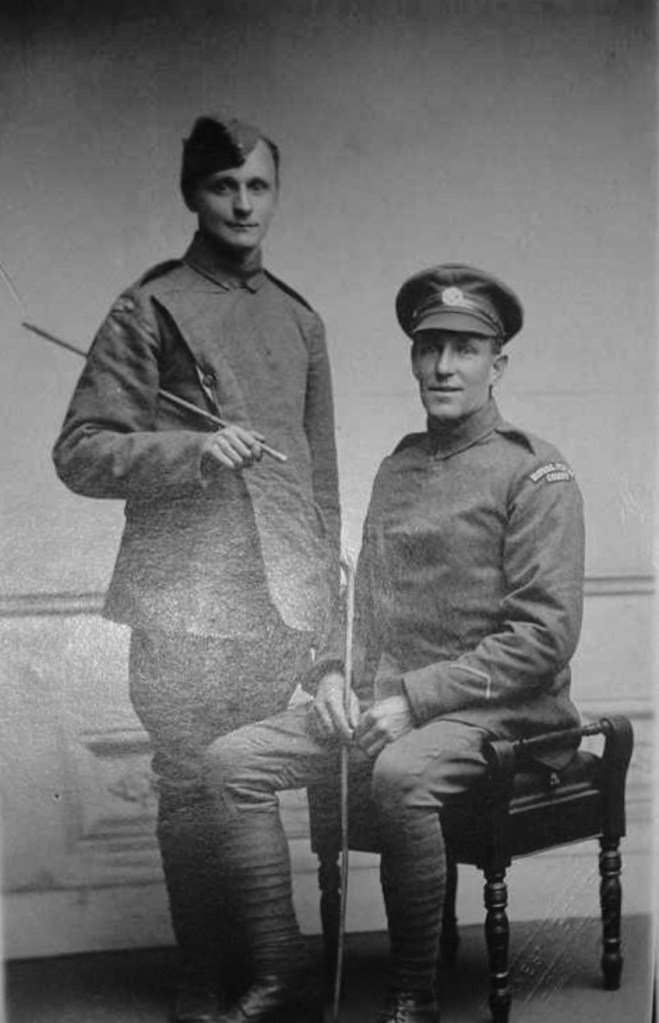
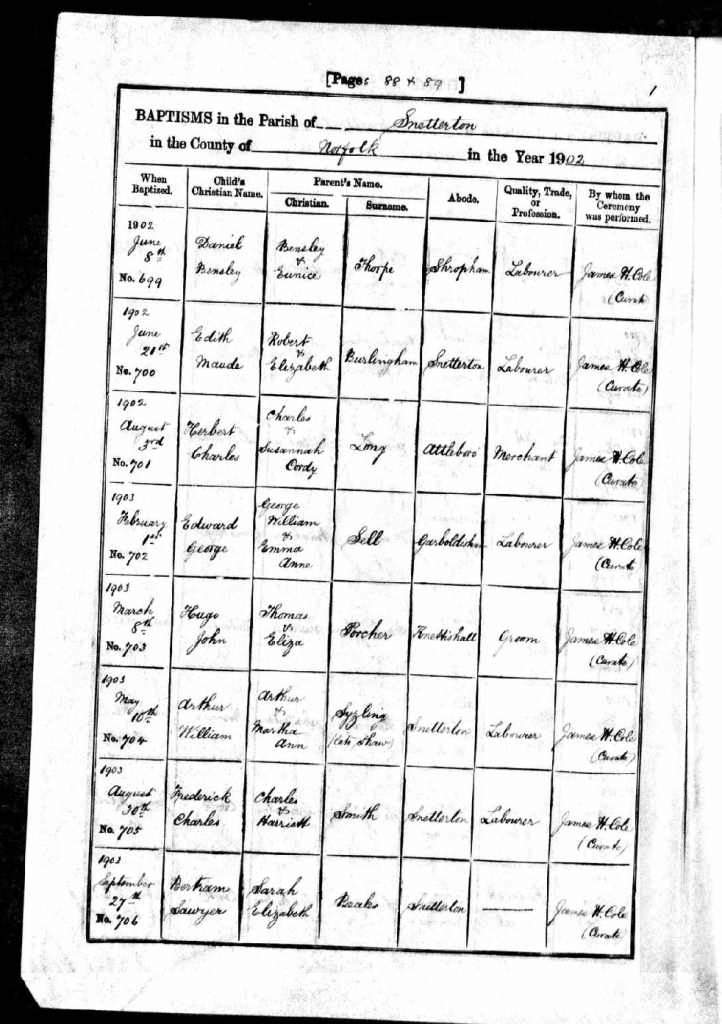
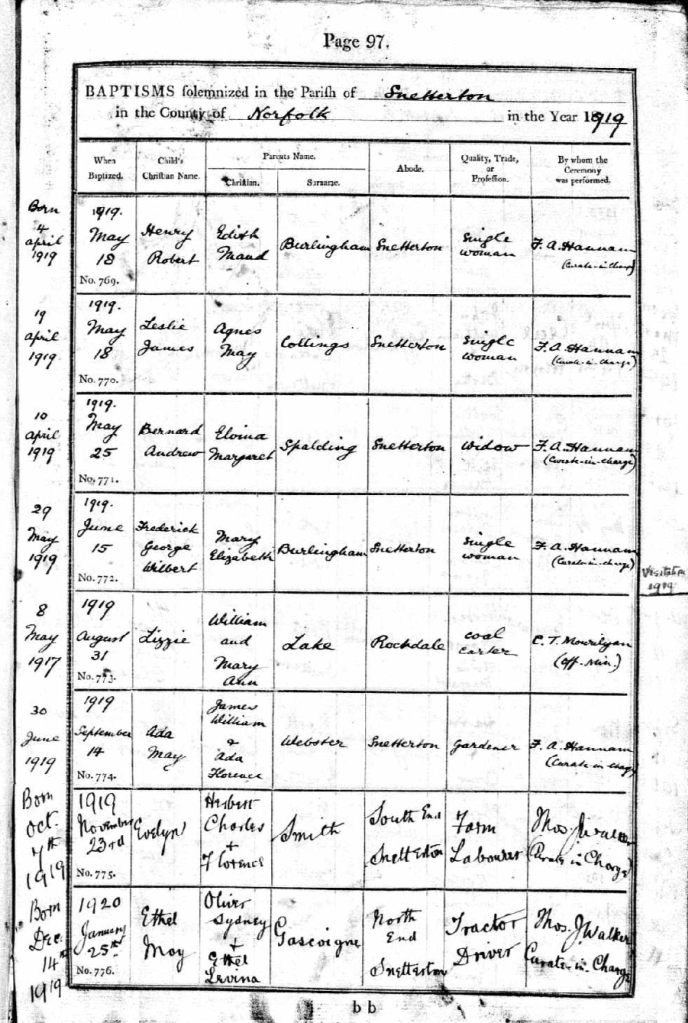
Edith becomes part of the wartime story because of an apparent liaison with an Australian soldier, known only as ‘Jack.’ For context, Edith was born in Snetterton on 14th May 1902; so was a girl of just twelve years at the outbreak of war in 1914. By the time she gave birth to a son, Henry, on April 4th 1919, she was still a month short of her 17th birthday, and very much still a child herself. There is a confusion in the records as her baptism gives her year of birth as 1902, while later census records record her as born in 1903 – the vicar would appear to be correct.
The question I was asked was whether I had any information about this chapter of family history, or if I knew anything about ‘Jack’? The simple answer was no.
The family lore was apparently that as the mother of an illegitimate child, Edith was ostracised by the family and went on to marry Walter Smith in 1920, raising a family together at Great Hockham.
As for Jack, what did we know?
The only suggestions we have are that he was Australian, a pilot or connected to the Australian Flying Corps, and that he was known as Jack and returned to Australia before the birth of Henry. He was apparently injured, and Edith came across him while he was convalescing in Norfolk. I have to add that none of this is yet supported by documentary evidence.
There were a number of military hospitals in the vicinity of Snetterton; Thetford St Nicholas Auxiliary Hospital, Thetford Cottage Hospital, Thetford Camp Military Hospital, Garboldisham Manor Voluntary Aid Detachment, and West Harling Hall Voluntary Aid Detachment, to name just a few. West Harling Hall was just up the road from Edith’s home village.
Although we don’t know how their paths crossed, it is possible that Edith may have worked as a volunteer at one of these establishments, and although she was too young to be a qualified nurse, women and girls were often working to support the network of establishments in the hospital chain. Equally, we don’t yet know Jack’s place in the chain, but it makes for an interesting hypothesis. In any case, nature dictates their liaison must have happened in the summer of 1918 around the end of June or early July.
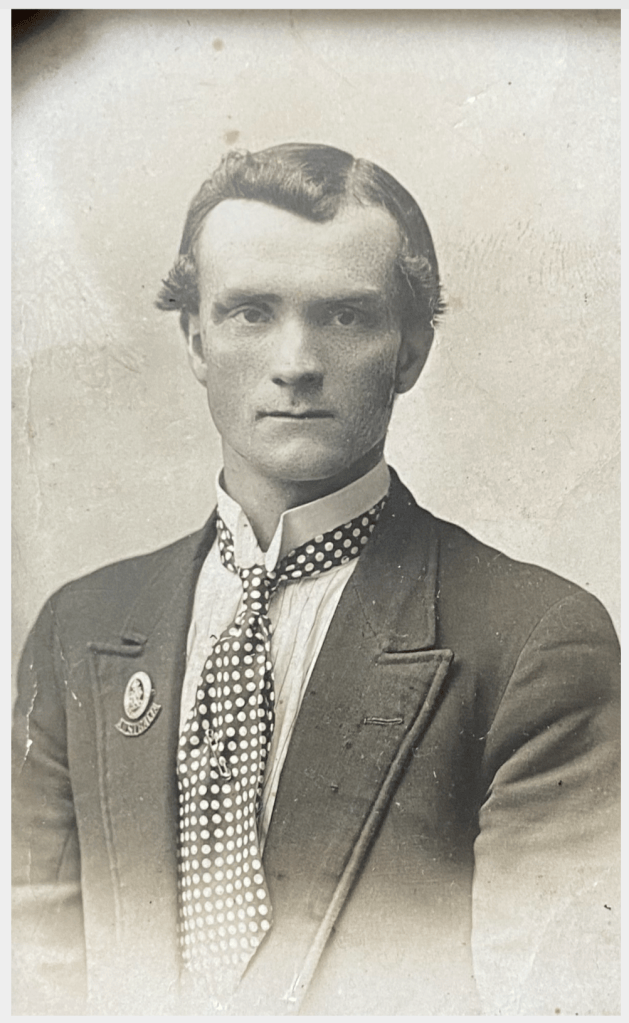
I’ve yet been able to connect Jack to any particular Australian Flying Corps squadron. Although there were Royal Flying Corps stations locally, such as Harling Road and Snarehill, the Australian squadrons were based in places like Minchinhampton, Leighterton and Yatesbury in south west England. Although Australians clearly flew to east Anglia judging by burials in Norfolk cemeteries, we have no clue how Jack came to be here. Maybe he knew Jeremiah Burlingham? It’s all currently guesswork.
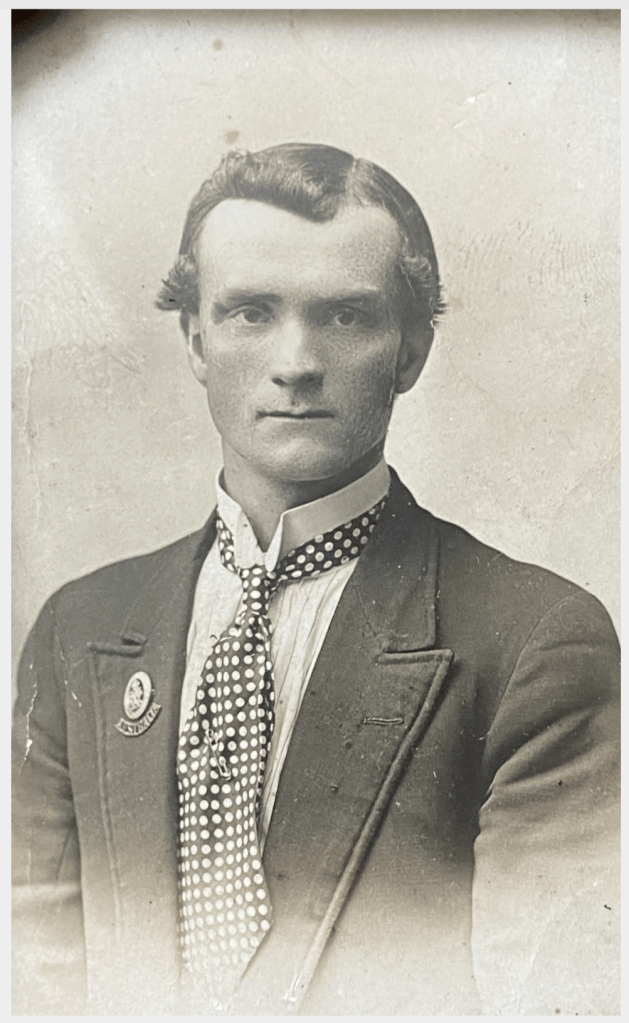
From the picture we have we can see Jack dressed in civilian clothes and sporting his Silver War Badge showing he was discharged from service due to wounds, along with an ‘Australia’ title. We don’t know where or when the picture was taken, but there’s something that tells me this was a picture sent from Australia after the war. He’s not yet wearing any medals, so perhaps it’s very soon after he arrived home or immediately at war’s end prior to the issue of any awards? We simply don’t know.
Yet…
So, as usual, one blog leads to another as we continue to shake the family tree for information. Another project for another day, and in the meantime someone might recognise Jack and help complete the ever growing Burlingham family jigsaw.
The quest continues.


