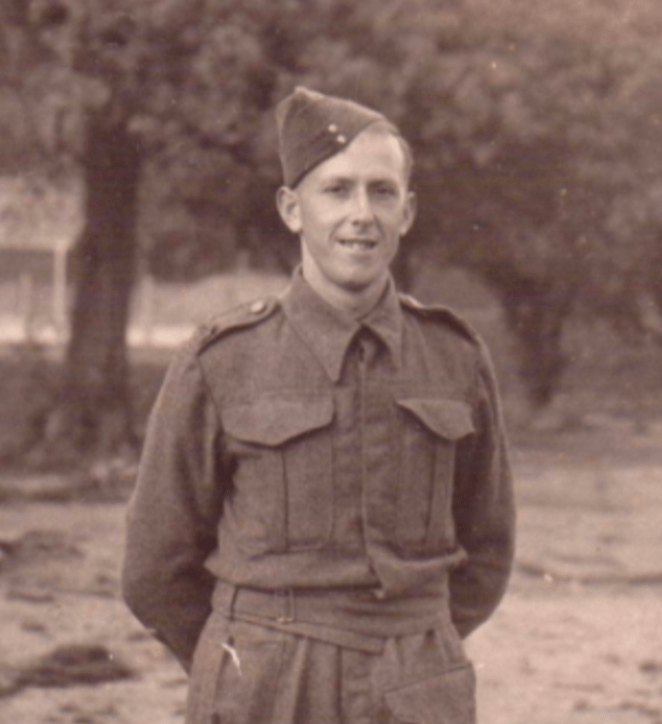
It’s taken over a year, but finally I’ve received more information about uncle Harry Cole.
When I applied to the Ministry of Defence last year for the service papers for Harry, I was aware that it could take up to a year, but it soon became apparent through a series of holding emails that they were inundated with requests, and hampered by the project of transferring all British World War 2 service records from the National Archives into the public domain.
Eventually, after almost thirteen months, I received an offer to deliver an abbreviated selection of his papers within 25 days – effectively his attestation papers and a brief statement of service. The alternative was to stay the course, with no definite delivery date. Impatience being what it is, I chose the former.
In any case, I wasn’t expecting any great revelations, but I’d at least have more facts to build on until his full records appear within the next couple of years – assuming there is anything else to disclose. As a result, I’m not sure I’ve moved much further forward since my first blog about him, which you can read here:
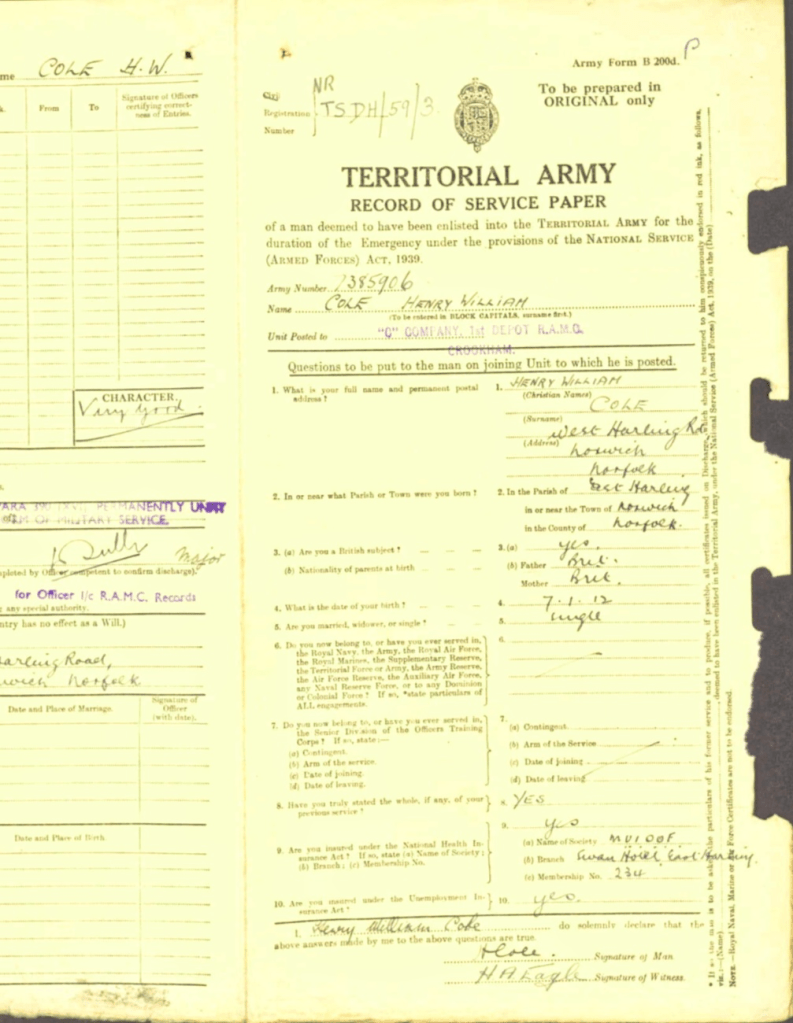
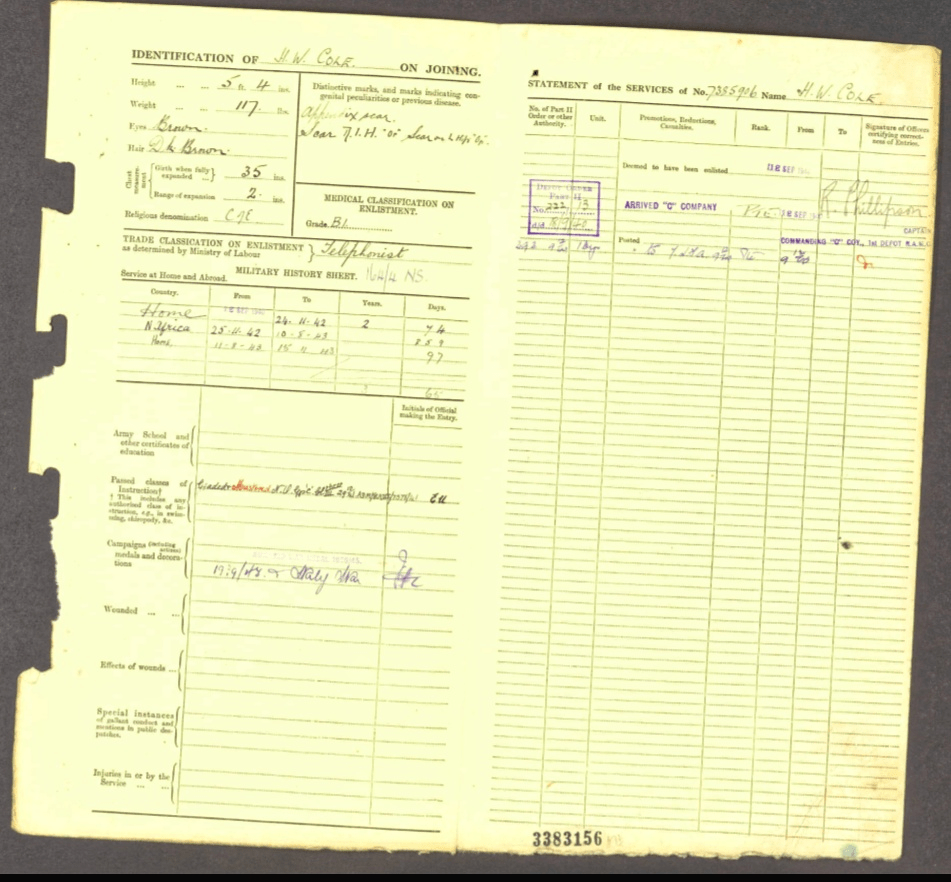
It seems Harry enlisted as a Territorial on 12th September 1940, with his occupation given as ‘telephonist’ with no further information about where he was employed.
He was taken on the strength of the Royal Army Medical Corps as part of C Company, 1st Depot at Boyce Barracks at Crookham in Hampshire. This was the training school for the RAMC, although no details are given about his training.
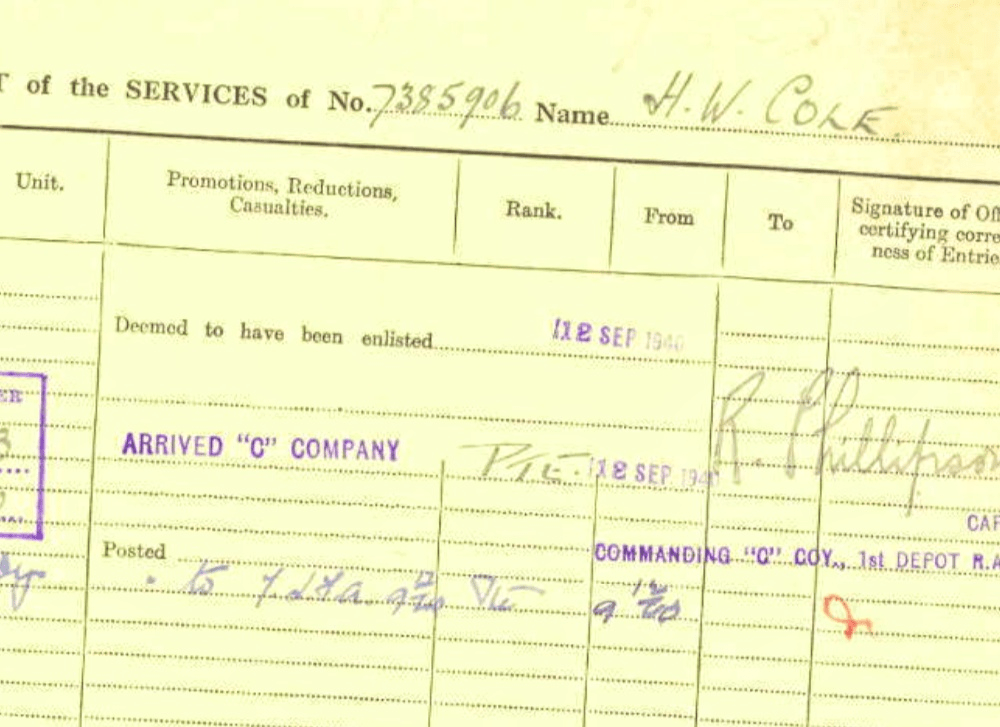
On the 25th November 1942 Harry is in ‘North Africa.’ His records show ‘7FA’ which suggests the 7th Light Field Ambulance, which was part of 23 Armoured Brigade, 30 Corps, thus busting the myth that he was in India.
Unfortunately, from here on in, the record isn’t helpful in telling us much about his war. In early 1942, the 7th Light Field Ambulance had been at Leyswood House, Groombridge, Tunbridge Wells. I don’t know if Harry was with them in May when King George VI visited them.
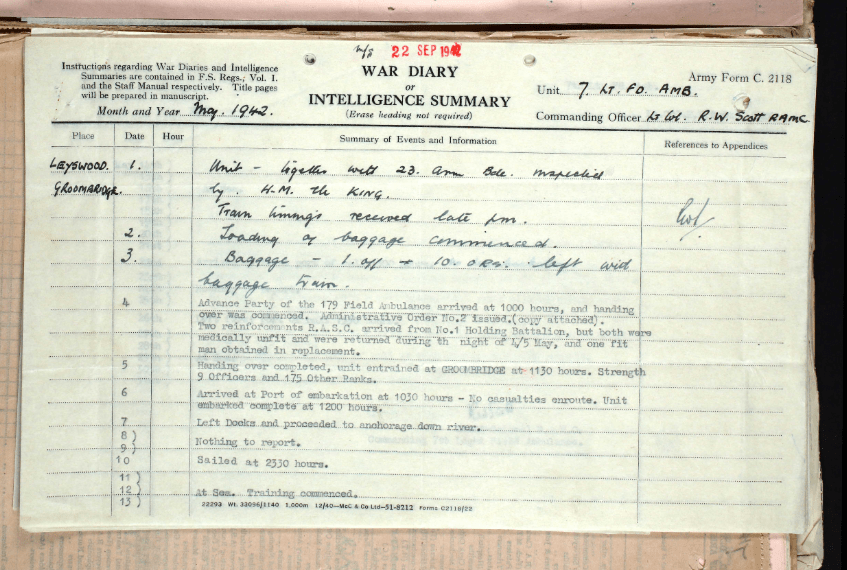
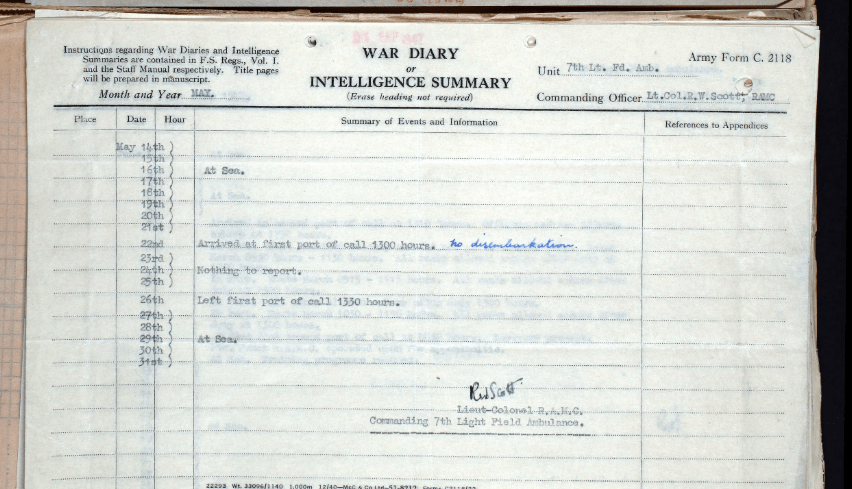
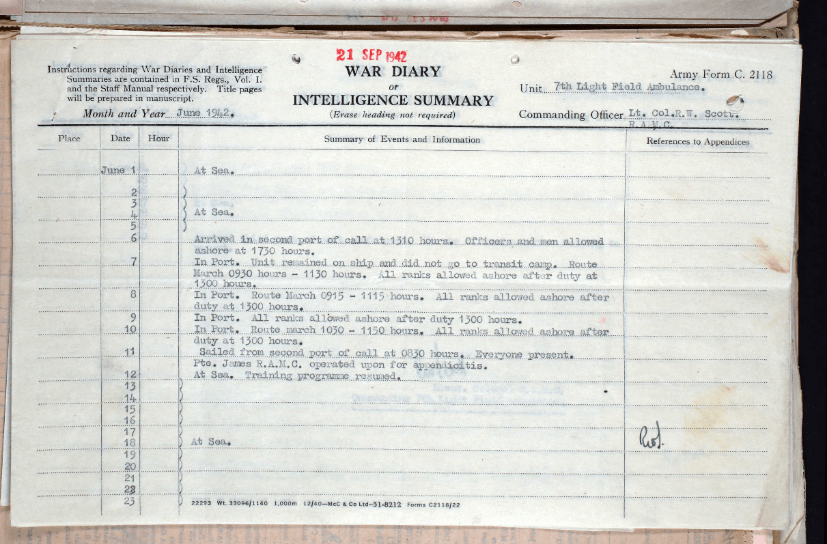
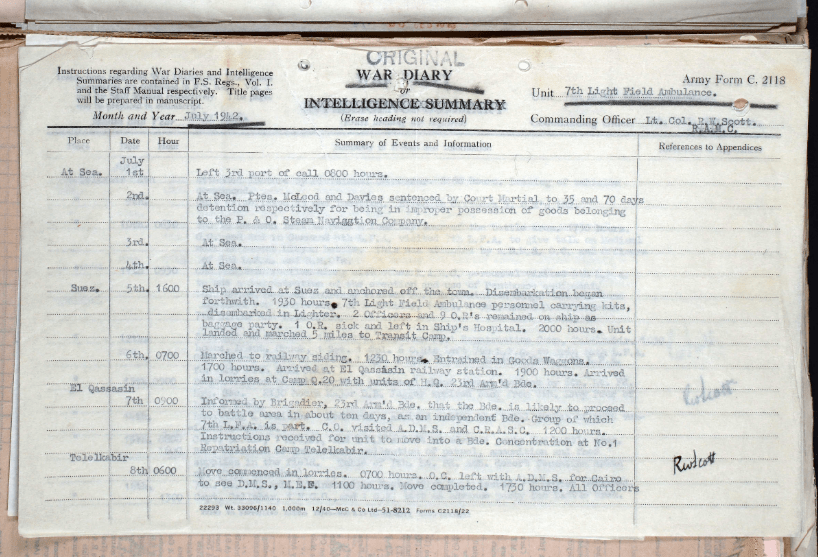
Their journey to Africa took from May 10th until July 5th, when they arrived at Suez; but from the timings on Harry’s record we can assume he wasn’t part of the original contingent and didn’t join them until much later.
This is where close examination of the record causes confusion.
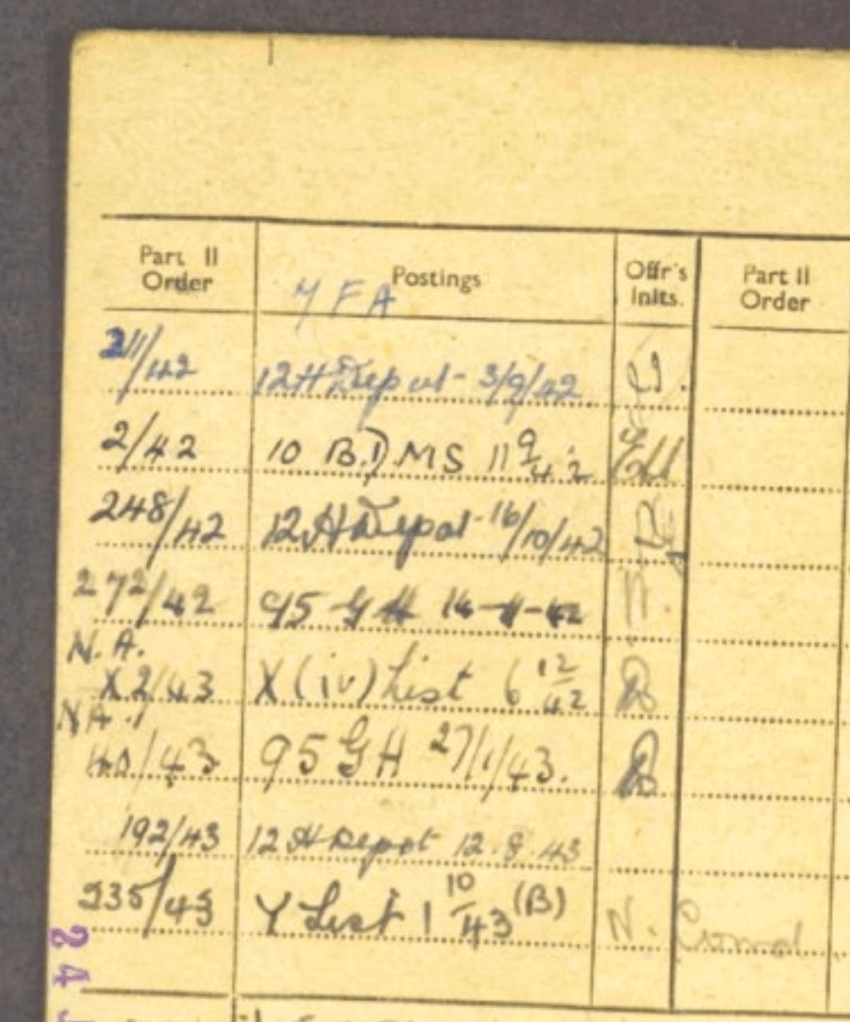
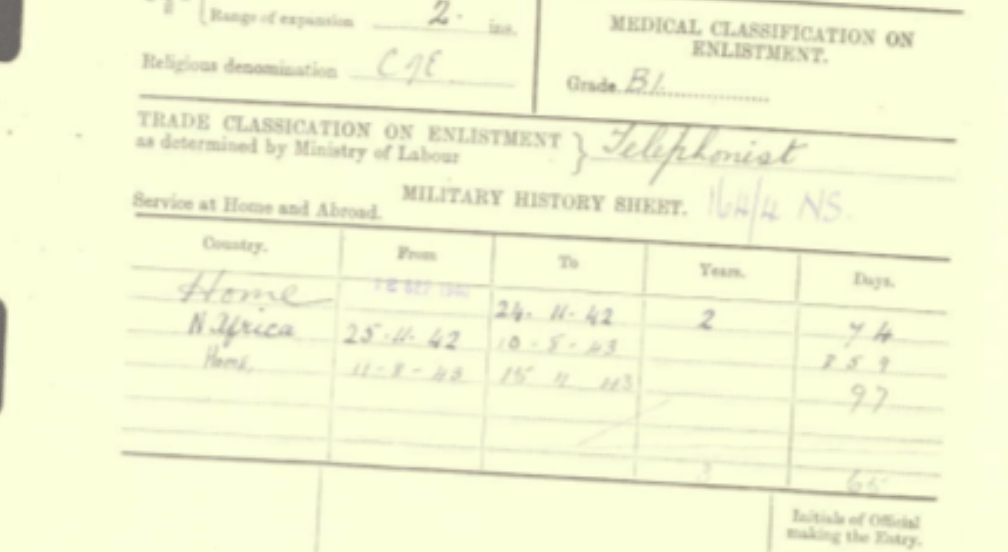
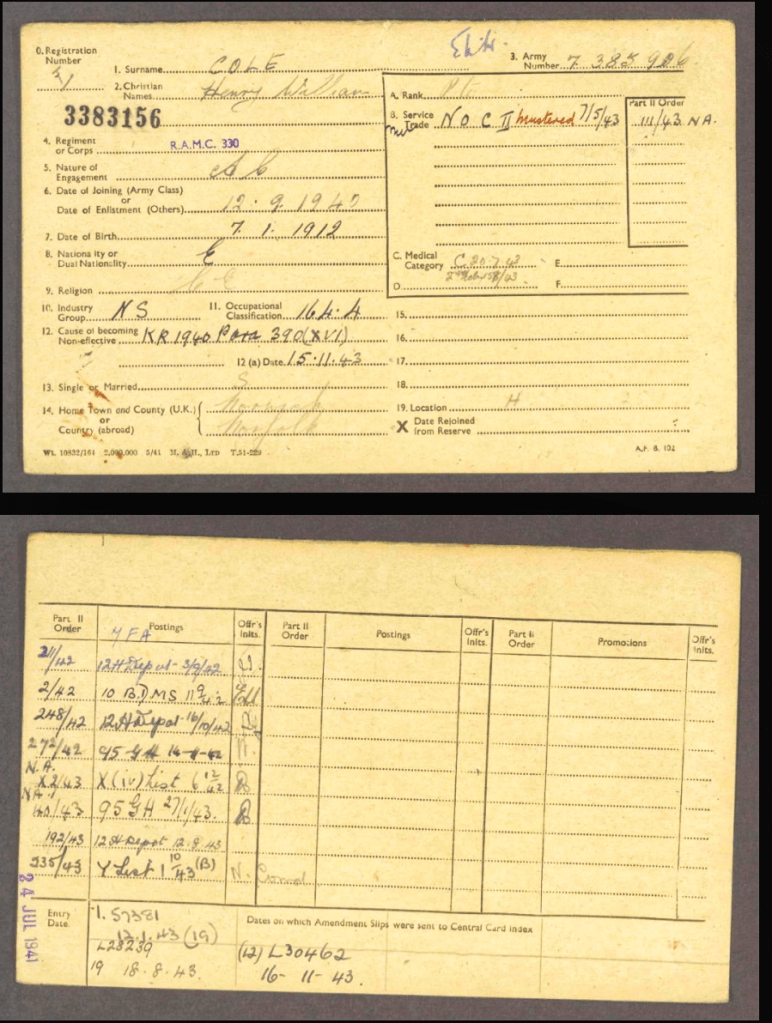
He is shown as posted to 95 General Hospital as of 14th November 1942, which is prior to his accrued service date of 25th November, and then on the X(IV) list as awaiting redeployment on 6th December.
The second battle of El Alamein had just ended and the 7th Light Field Ambulance was in Egypt, near Mersa Matruh on the coast, yet as far as I can decipher, the 95th British General Hospital was at Ben Aknoun in Algiers, much further west. Perhaps someone will have better knowledge of the geography than me. In any case, Harry is listed again as with the 95th General Hospital from 27th January 1943 until August 1943 when he was back in England, a total of 259 days overseas.
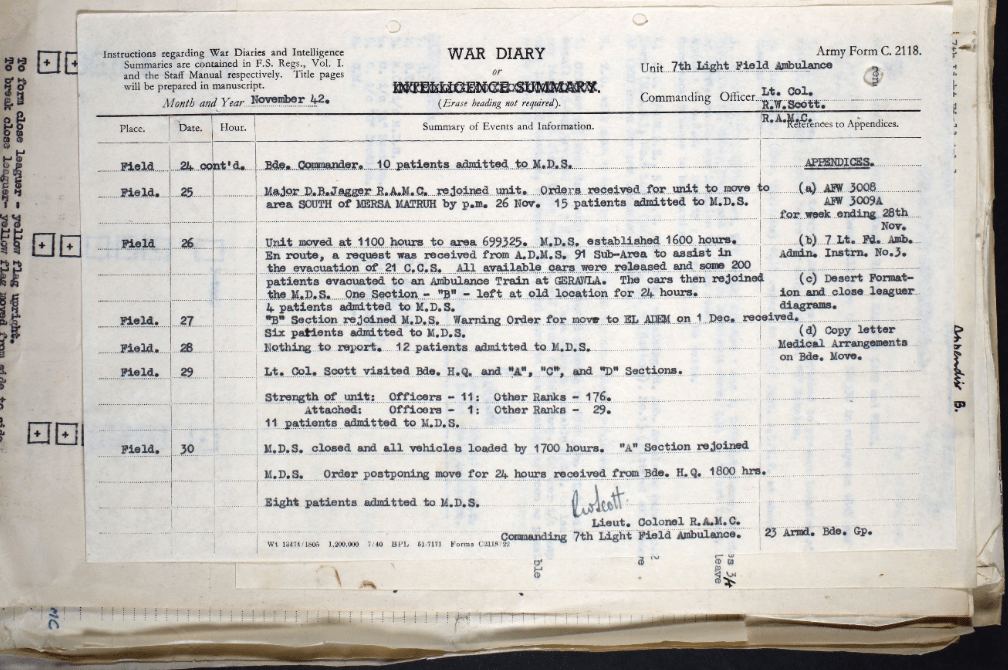
What I don’t know is whether Harry’s ‘attachment’ to the hospital was due to duty or to his health. Illness was rife in the heat, so he may have been unwell, but having arrived home in August 1943 he was on the ‘Y’ list as being unfit for service, so whatever happened signalled the end of his military career and he was discharged under King’s Regulations on November 15th.
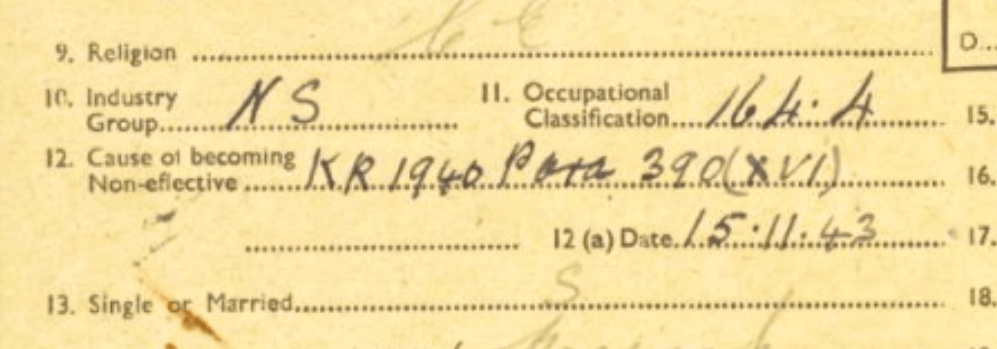
As we know from the previous blog, Harry was an involuntary patient at Thorpe Hospital in Norwich from March 1945. These latest records have revealed nothing about the spiral from leaving the army in November 1943 until entering the mental hospital where he would spend much of the rest of his life.
To me, this adds more suspicion that his experiences in the Army, and particularly during the North Africa campaign, caused a terminal collapse in his mental health, and until we get the final disclosure of his papers in the next year or two when they reach the public domain, the truth will remain a well hidden secret. I can only imagine what he went through.
We will have to wait.
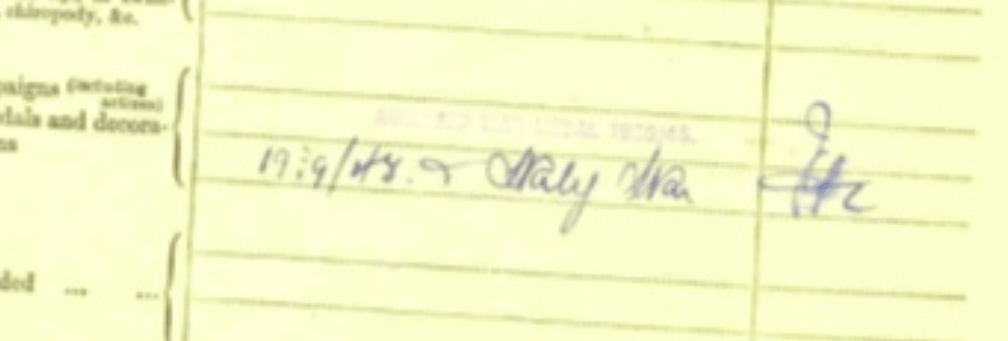
The final footnote to his papers is that he holds the 1939-45 Star, the Italy Star and the British War Medal. I’m certain Harry didn’t make it to Italy with his comrades, but was eligible due to his unit being ‘in theatre’ for the qualifying period either at sea or on land.

 Farm Boys and Pioneers