
When we went to see the touring production of War Horse recently, I was warned by my wife not to be a war bore, but it was her surprise when I pointed out a family connection of hers to the Devonshire Yeomanry; the regiment that is central to the tale of young Albert Narracott and his horse Joey.
I can’t claim any genealogical connection to Albert for her, but her family tree has a branch that reaches deep into the west country and straight to the local regiment. She knew that even though War Horse is a wonderful act of fiction, I would always be looking deeper than the plot and finding links between art, history and family. It’s what a war bore does…
Her family links by marriage take us beyond ‘Devonshire’ to the wonderful north coast of Cornwall. If you’d like another connection between the arts and the family tree, this story takes us to Port Isaac – of Doc Martin TV fame. Although there’s a whole other family history connected to sea captains and long standing residents of the picturesque fishing village, this tale connects to the parish of St Endellion – the hamlet at the top of the hill before you venture down the narrow road to the carpark and harbour of Port Isaac.
We begin in the green valleys above the sea cliffs and discover the family of Thomas May.
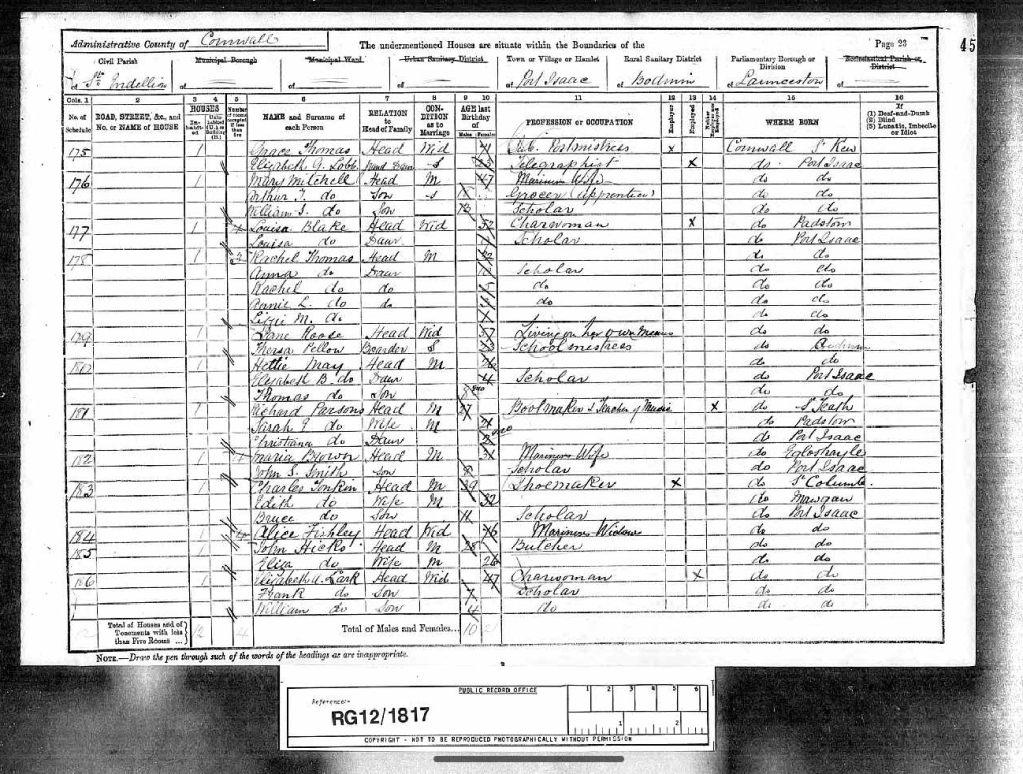
Thomas May snr and his wife Harriet (Hetty) lived at St Endellion where they produced five children. A sixth child would arrive from a second marriage to Mary, after Hetty died in 1897. The focus of this story is Thomas May jnr, the third child, born on 20th July 1890. Thomas first appears in the 1891 census aged eight months.
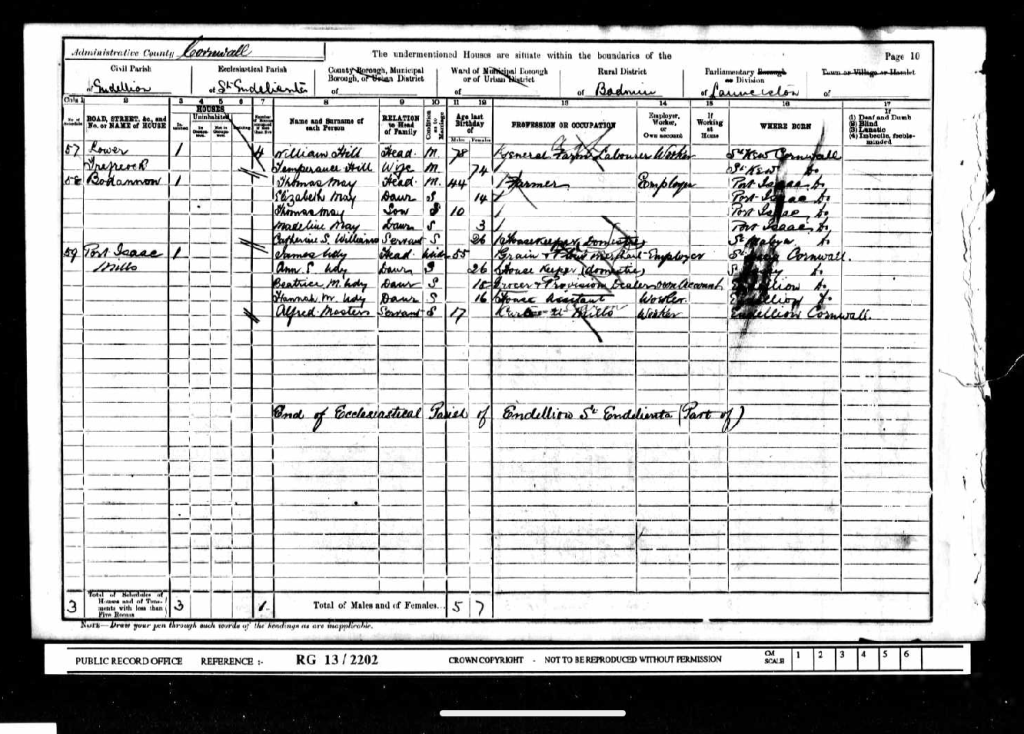
1901 sees the family recorded as living at Bodannon, Trewetha, St Endellion, with Thomas listed aged 10. These steep fields were hard work to farm, but there was a close family network of small farms working the land between the granite walls and thorn hedges, making up the patchwork quilt landscape above the towering cliffs and roaring ocean.
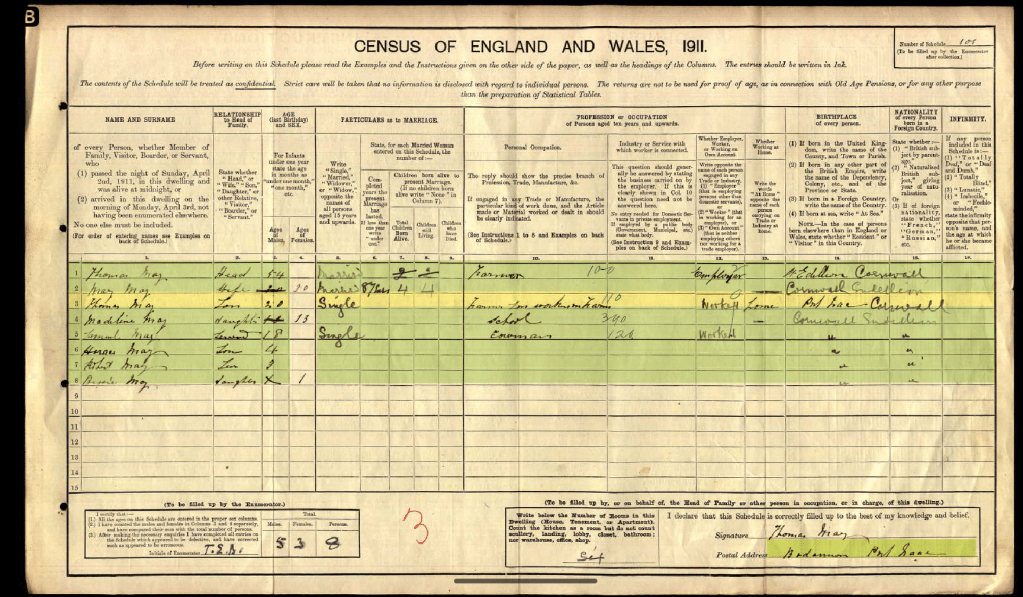
In April 1911, the family was still at Bodannon with Thomas shown as ‘farmers son’ much like Albert Narracott. With the Great War still three years distant, we can assume that the agricultural sons of Cornwall like Thomas would be proficient horsemen; with a lack of mechanical equipment and the need to farm the steep terrain carefully. Also, we don’t have any information about whether Thomas jnr, now aged twenty, had shown an interest in military service as a ‘territorial’ or part time soldier.
Apparently Thomas had taken to the sea as a career, after a disagreement with his father, but war was looming.
War would bring his career choices very much into focus.
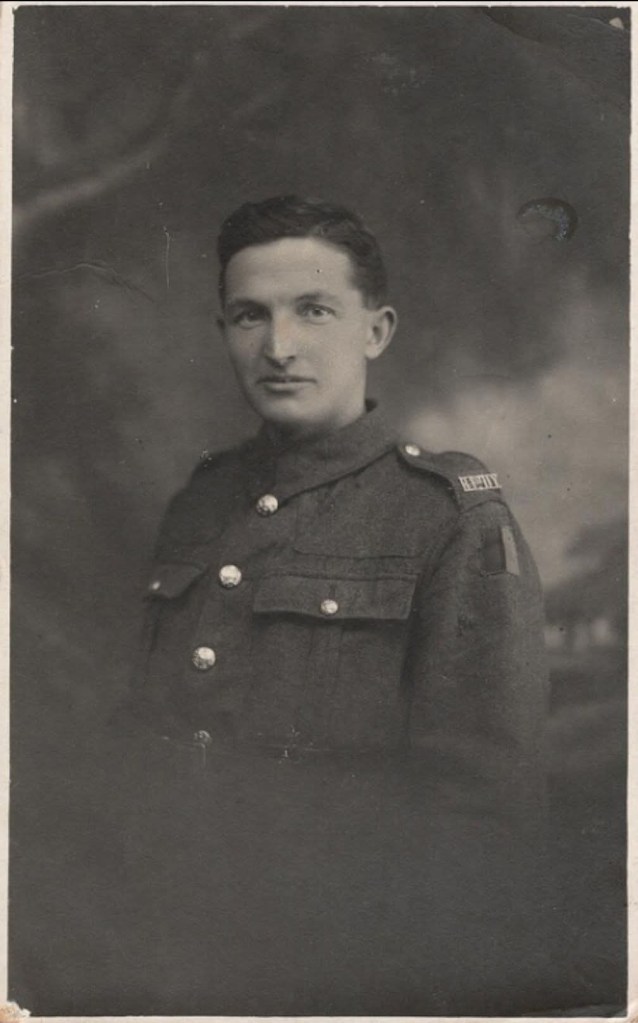
What we do know though is that Thomas joined his local regiment, The 1st Royal North Devon Yeomanry (Hussars). We don’t know exactly when he enlisted, but knowing his embarkation date of 23rd September 1915, we can assume that he signed up in late 1914, knowing the typical training period of a new recruit being at least nine months, and also the movements of the regiment.
I don’t know to which company Thomas belonged, but on the outbreak of war in August 1914 their Headquarters and ‘B’ Companies were at Barnstaple, ‘A’ Company at Holsworthy, ‘C’ Company at South Molton and ‘D’ Company at Torrington, all under the command of the 2nd South Western Mounted Brigade. I can’t draw too many parallels with the plot of War Horse, but Thomas was quick to sign up, unlike Albert Narracott who was under age and had to wait. Also, we don’t know if the farm had to give up any horses as the expeditionary force was mobilised. In any case….
What we can presume is that Thomas was quickly under training ready for his unit to be called forward.
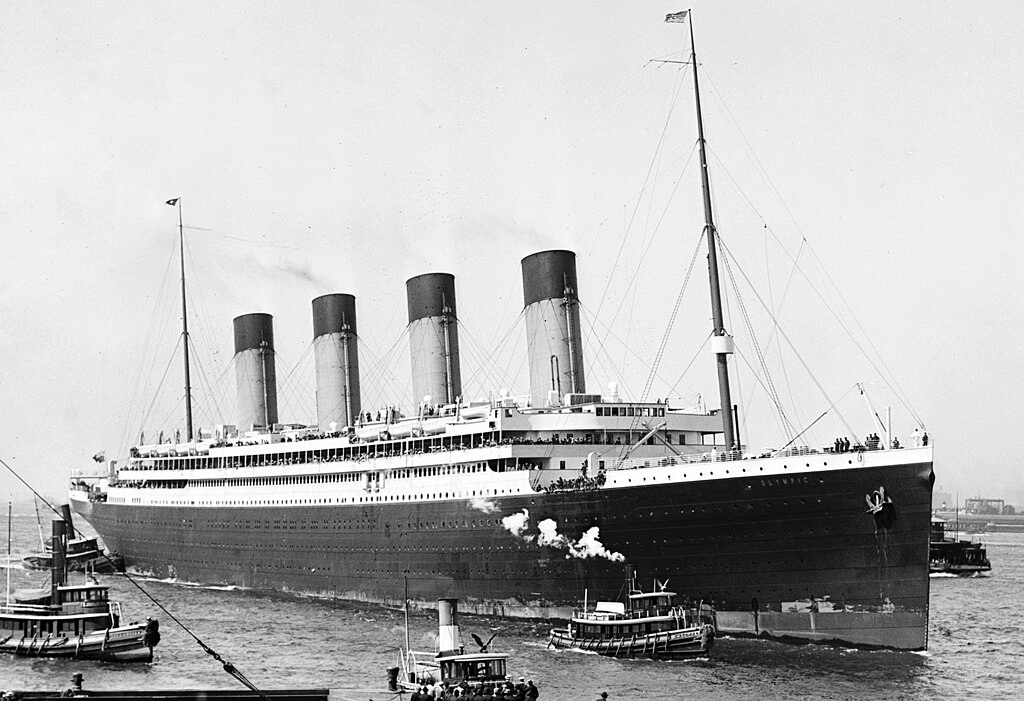
The brigade was moved to Colchester in August 1914 for preparation as a 2nd line formation. We presume Thomas didn’t become Private 2842 until later, but we know that in September 1915, in a parallel to War Horse, the brigade were relieved of their horses and became a dismounted infantry unit instead of a cavalry unit. Thomas embarked at Liverpool on 23rd September 1915 aboard RMS Olympic. Thomas was off to war.
In a departure from the play, reality for Thomas wasn’t to be the Western Front, but Mudros and onwards to Gallipoli.
Landing in Gallipoli on October 9th and attached to the 11th (Northern) Division, Thomas would have found himself digging trenches, before going into the firing line during November with the 2nd Mounted Division and 53rd (Welsh) Infantry Division. Their time in Gallipoli was short however, and by December 19th they were withdrawn in preparation for transfer to Egypt as the Gallipoli campaign was wound down.
In late December Thomas found himself on duties defending the Suez Canal, and by February 1916, found himself absorbed into the 2nd Mounted Division; eventually being reorganised into the 229th Brigade of the 74th (Yeomanry) Division. This amalgamation of former mounted units is where the divisional name ‘the broken spurs’ is derived from.

A year later, in February 1917, a further territorial army reorganisation took place when Thomas and the 1st Royal North Devons were renamed as the 16th Battalion, Devonshire Regiment and merged with the Royal Devon Yeomanry. As a consequence, Thomas was renumbered as 345294.
The 74th Division took part in the invasion of Palestine in 1917 and 1918.
The division was not fully formed when it participated in the Second Battle of Gaza between 17 and 19 April 1917. It acted as reserve to the Eastern Force and was not engaged. Thereafter, the division was assigned to XX Corps where it remained for the rest of its time in Palestine.
In October and November 1917, the division took part in the Third Battle of Gaza (including the capture of Beersheba on 31 October and the Sheria Position on 6 November). At the end of 1917, it took part in the capture and defence of Jerusalem and in March 1918 in the Battle of Tell ‘Asur. On 3 April 1918, the division was warned that it would move to France and by the end of the month had completed embarkation at Alexandria.
Finally, after two tough years in the heat of Egypt and Palestine, Thomas was on his way to the Western Front aboard HMTS Leasowe Castle en route via Marseilles.
The Division soon found themselves near Abbeville to undergo intensive training in tactics for the terrain of France and Flanders, including gas defence, before finally entering the line on July 24th.
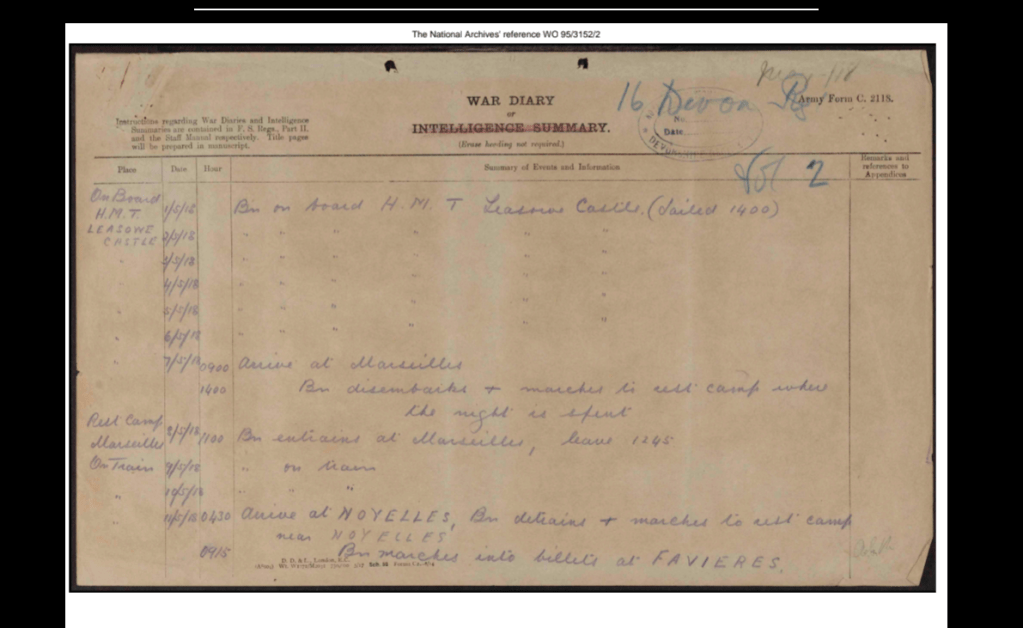
Rejoining the theme of War Horse, Thomas and his comrades were involved in the final phases of the war and the 2nd Battle of the Somme and the ‘final advance’ to Flanders and Artois. At the Armistice, Thomas was at Thimougies near Tournai. I’m not sure if at any point Thomas came across many retreating Germans in possession of British horses, but for the purposes of this tale it is of no consequence.
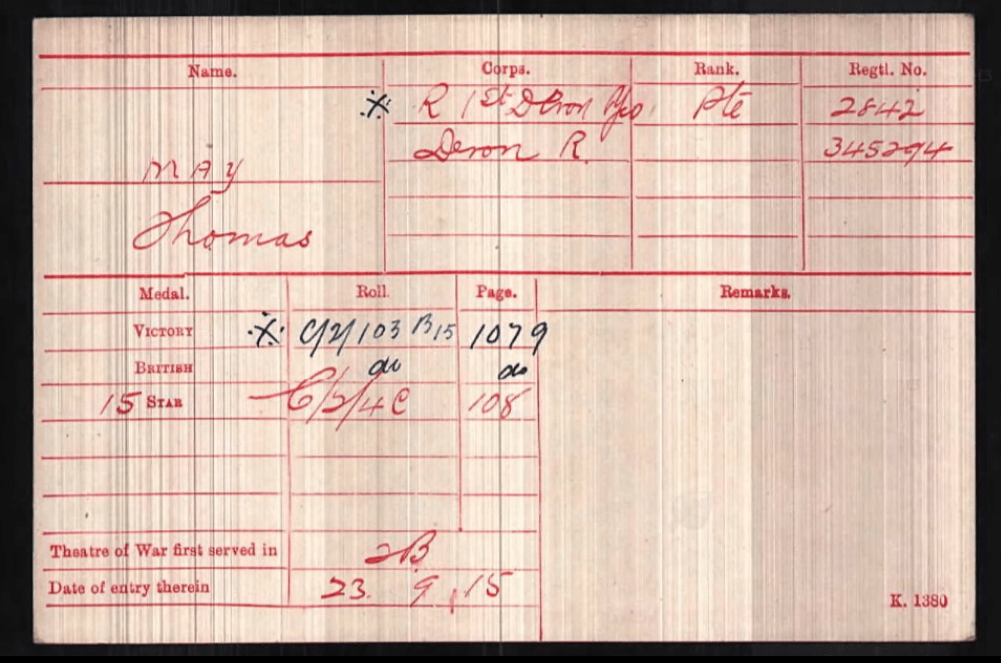
From available records, Thomas appears to have come through unscathed. Few records survive but below is his medal card showing he holds the 1915 Star and the Victory Medal and British War Medal. The Devonshire Regiment medal rolls show no dates of discharge for Thomas, so we presume he was still attached until 1919 when the rolls were drafted.
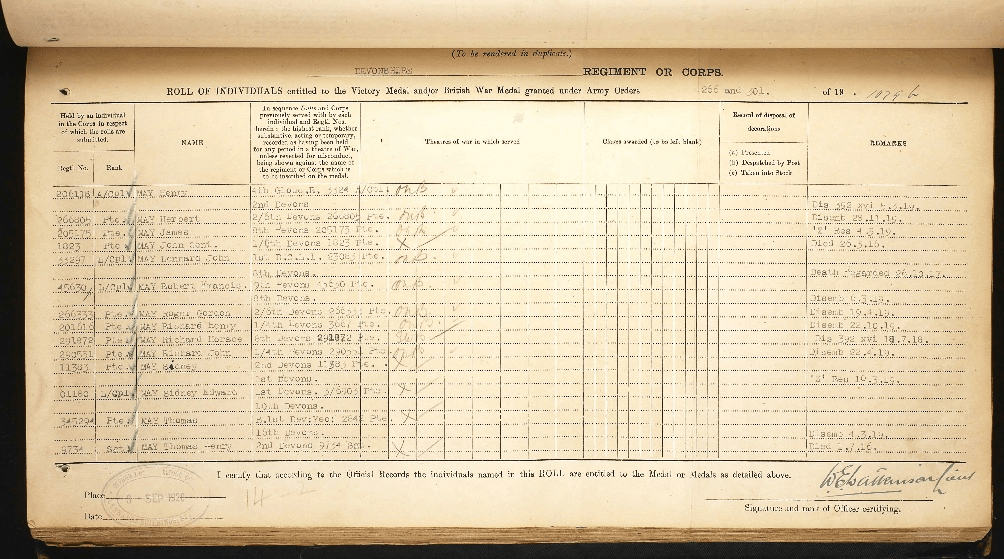
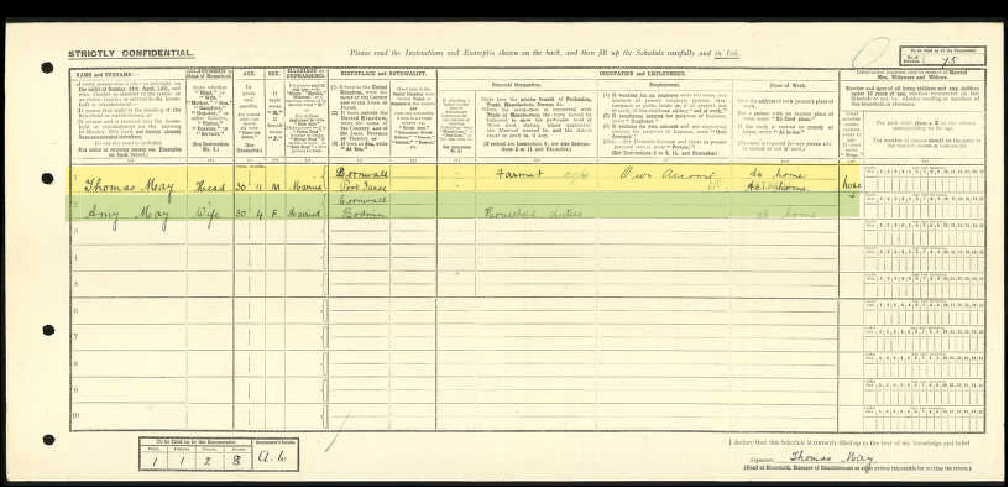
Certainly, by June 1919 Thomas had married Amy Parmee, and by 1921 he was farming on his own account at St Kew, Cornwall. Thomas went on to raise a family, and by the time of his death in 1950, was back at Port Isaac farming at Trewetha, where the circle began.
Addendum
Soon after posting the story my wife’s cousin Muriele, who is also related to Thomas by marriage, sent me a couple of extra images.
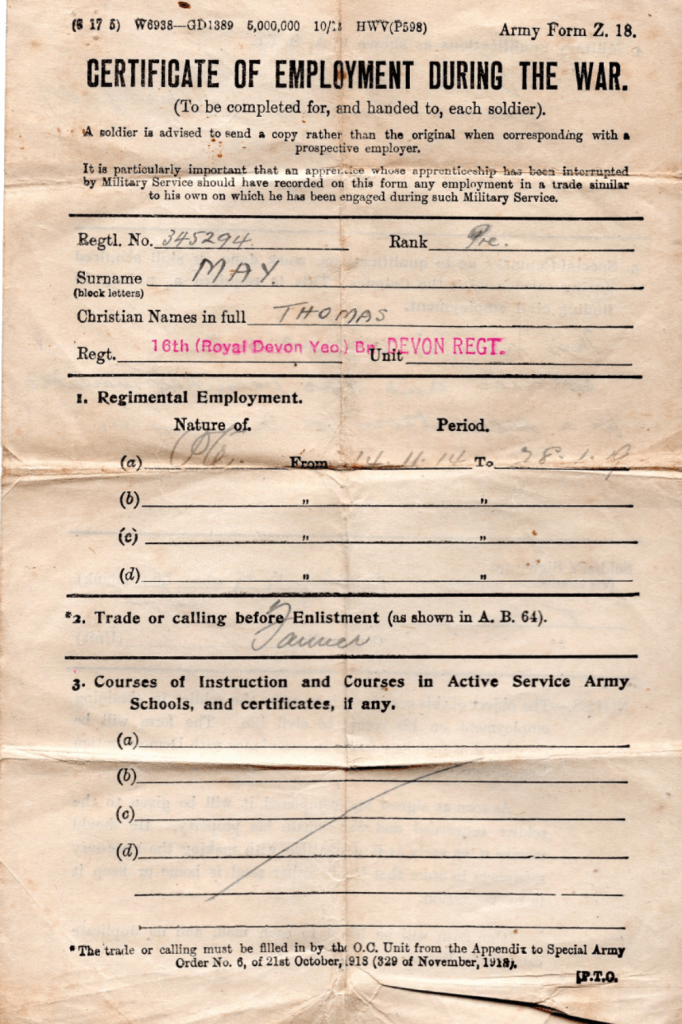
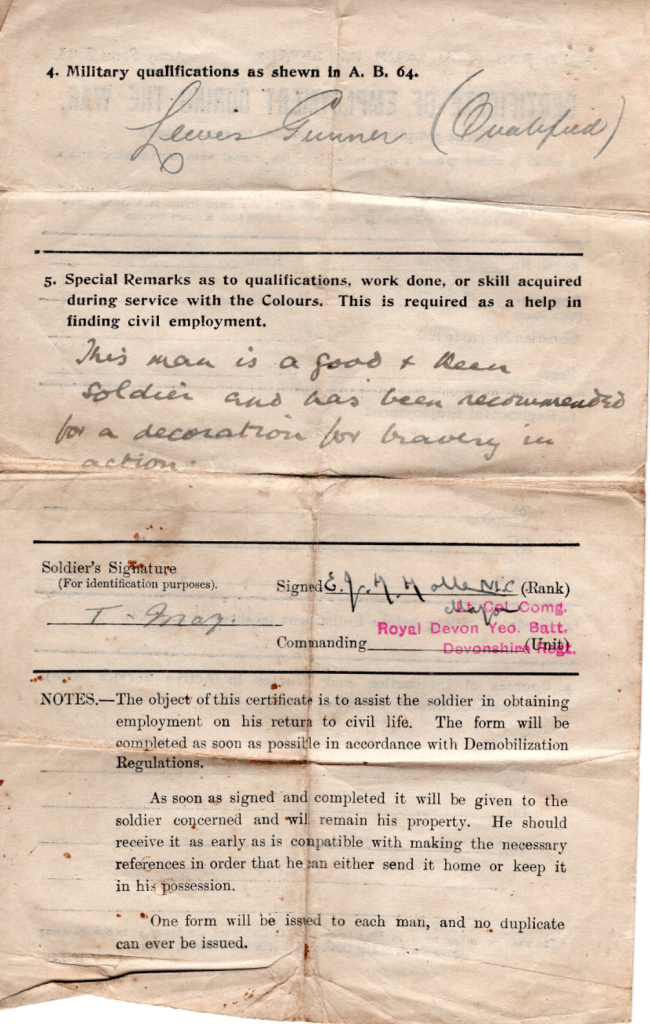
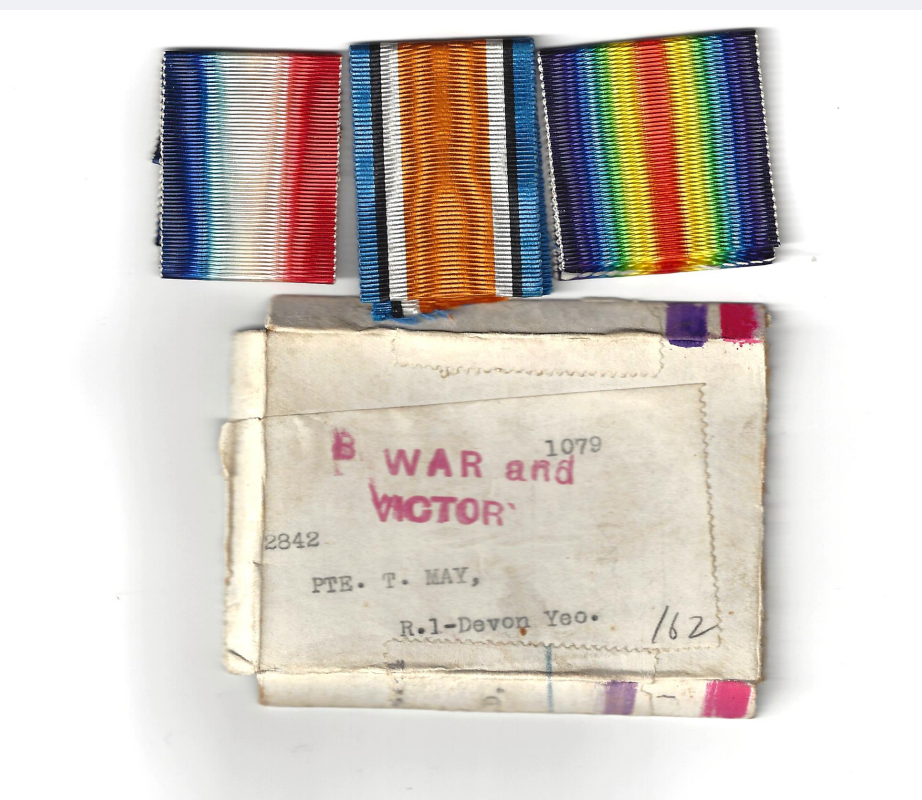
The family still holds his paybook, and his certificate of employment, which records he was a qualified Lewis Gunner and had been recommended for bravery, although no mention of that has been found in official records. It also confirms he enlisted on 14th November 1914, and was discharged on 28th January 1919.
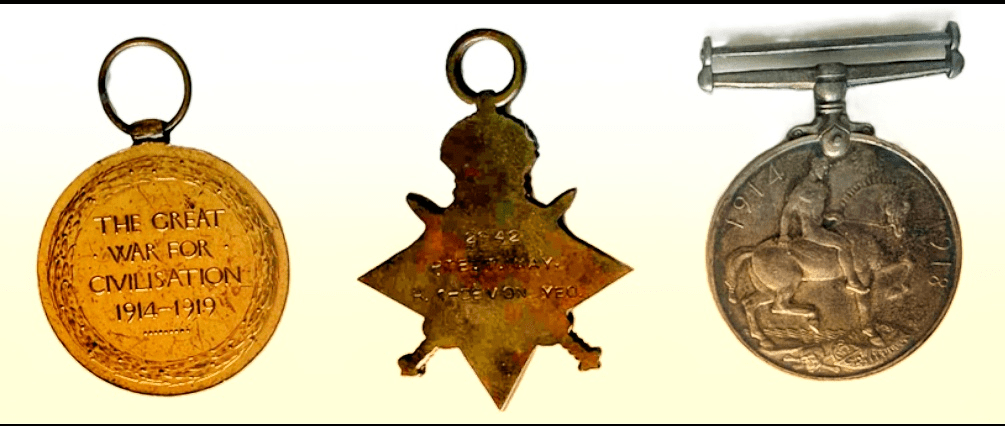
Also pictured are his medals, complete with box and detached ribbons – suggesting to me they were never worn. Indeed, Muriele tells that Thomas suffered recurrent nightmares in later life. A silent history that makes sense of why War Horse is so poignant to all who see it.
So there we have it; a parallel tale of a Devonshire soldier separated from ‘his’ horse during wartime. Perhaps I’m taking liberties by drawing similarities to the facts in the same way Michael Morpurgo so eloquently did when he wrote War Horse. Either way, Thomas May has an interesting story, and the current touring production of the musical is as magnificent now as when it was conceived. But amongst the fact and fiction one thing remains true: my wife is correct – I am a war bore!

 Farm Boys and Pioneers